

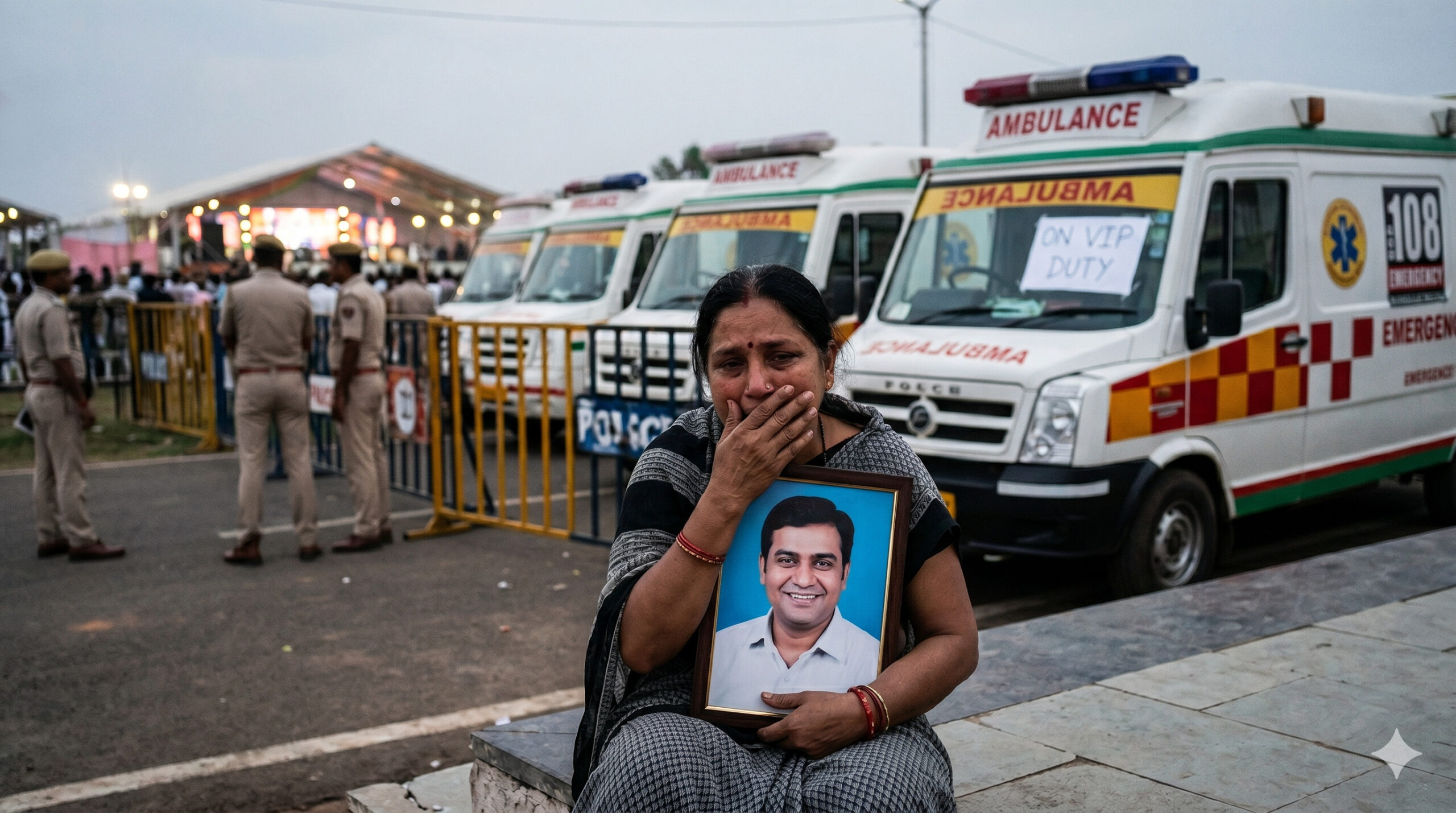
The death of journalist Deepak Soni exposes a system where VIP culture is prioritised over human life. Read how ambulance diversions led to a fatal delay in Raisen district, the neighbouring district of state capital.”
Bhopal:
While this headline (Hey VIPs, Pls Don’t Come…People Die) may sound a bit exaggerated, the incident that took place in Raisen district, about 45 km away from state capital Bhopal, on April 10 conveys precisely this message.
Had a VIP event not taken place there on April 11, it was quite possible that journalist Deepak Soni would have been still alive today.
Death of Deepak Soni was not merely the result of a road accident; rather, it was consequence of a system that prioritizes VIP protocols over the life of the common man.
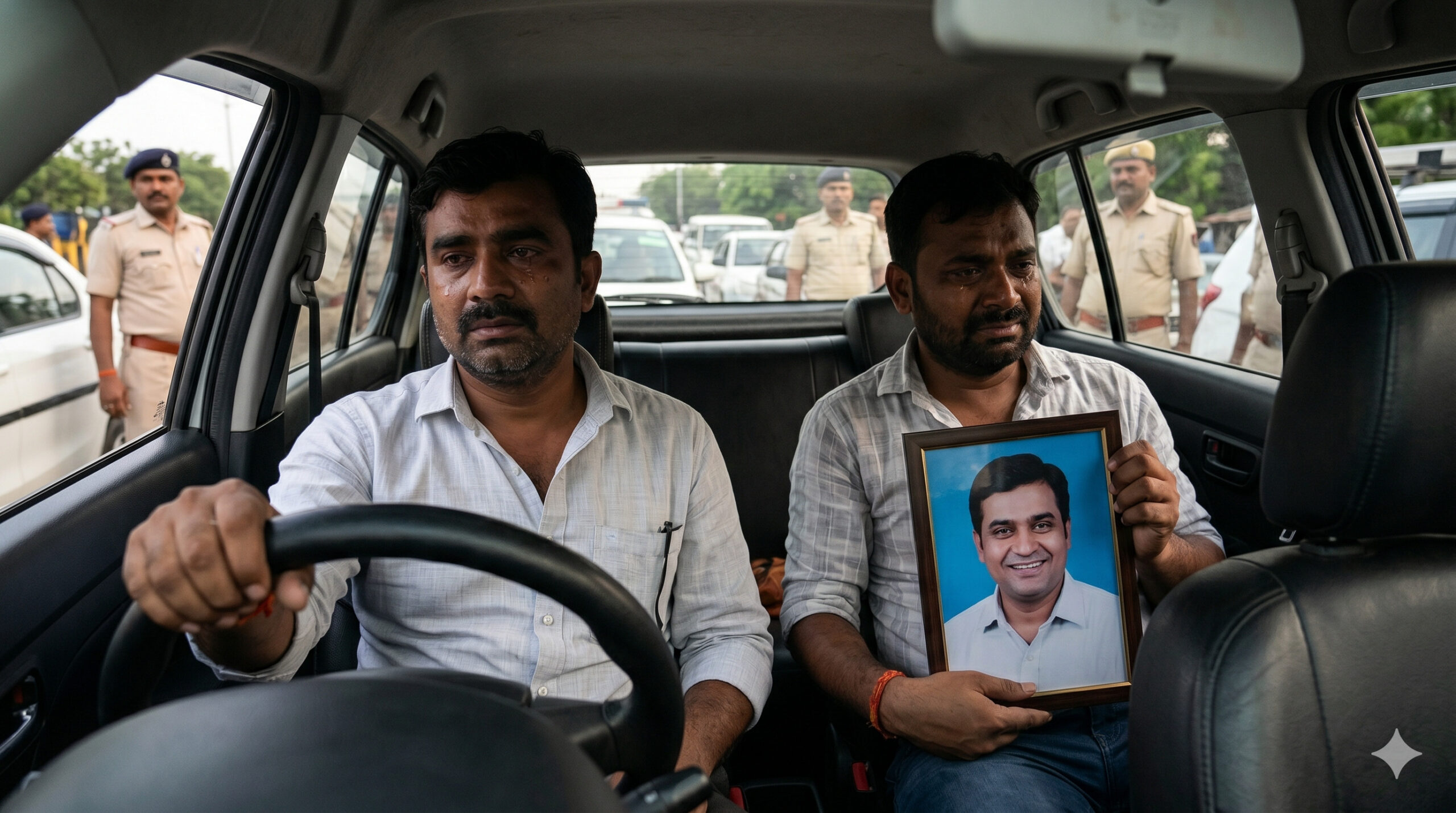
Soni, a resident of Sanchi, was a journalist by profession. He was on his way to Raisen district headquarters on Friday itself to cover the “Unapt Krishi Mahotsav-2026” (Advanced Agriculture Festival), held at the Dussehra Ground in Raisen the next day. The event was attended by Union Defense Minister Rajnath Singh, Union Agriculture Minister Shivraj Singh Chouhan, and Madhya Pradesh Chief Minister Mohan Yadav. En route, Deepak met with an accident. However, the true tragedy was not the accident itself, but what ensued thereafter.
Soni’s family members alleged as injured Deepak’s condition worsened in the government hospital at Raisen they and Soni’s colleagues contacted the District Hospital authorities and also ‘108’ Ambulance service in a desperate bid to get an ambulance and shift him to any better hospital in Bhopal. The response they received was that all available ambulances were currently deployed on VIP duty.
In other words, at that critical moment, the district’s entire emergency medical infrastructure was functioning not for the benefit of the general public, but solely to serve the VIPs. Consequently, it was nearly three hours later—after a significant delay—that he was finally transported to Bhopal in a private vehicle. By then, however, it was too late. Deepak died in Bhopal on Saturday.
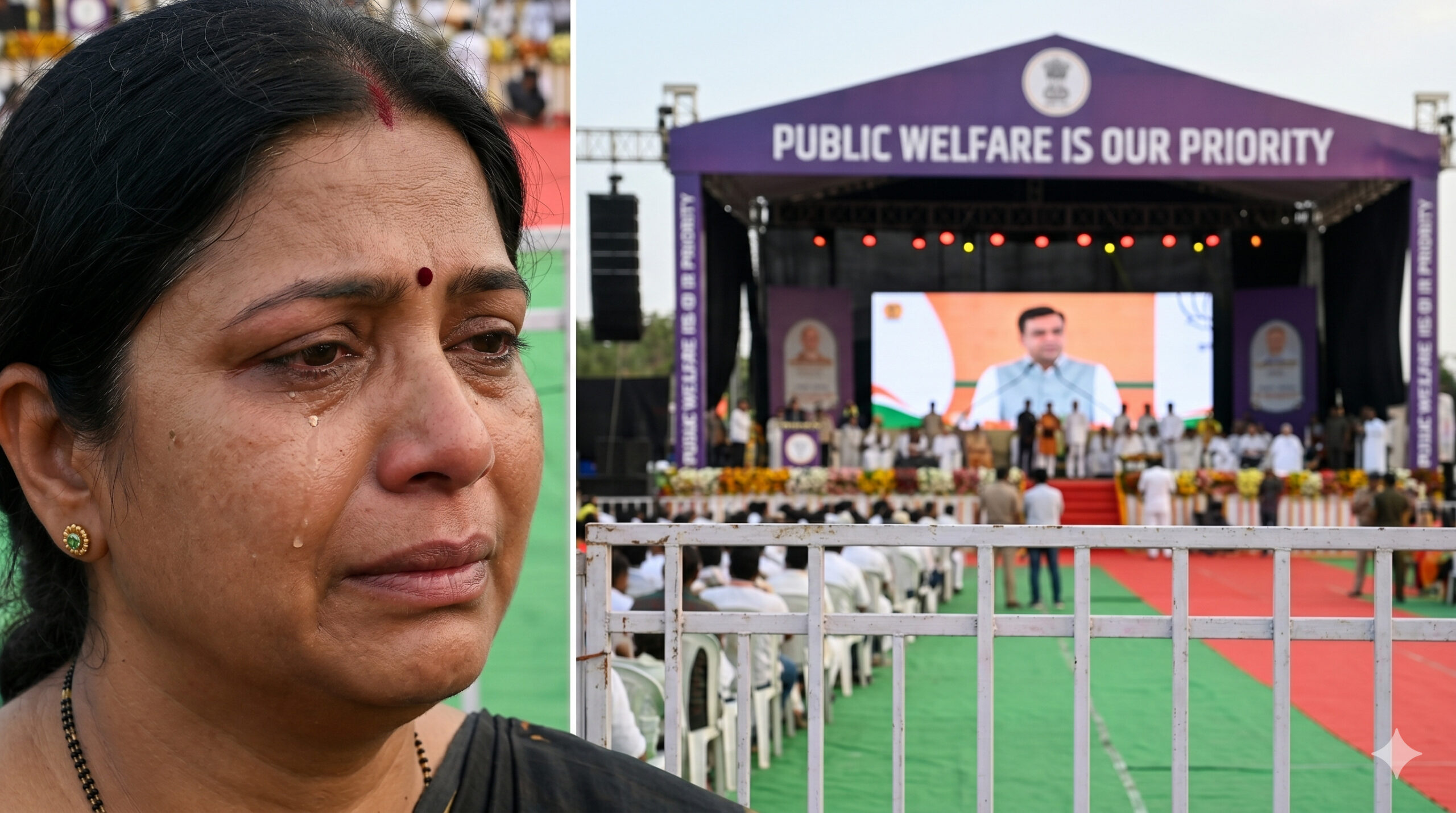
This is not merely the death of a single individual; it is the stark face of an insensitive system—one in which even life-saving resources are unhesitatingly diverted to serve the interests of those in power.
Reports regarding unavailability of ambulances in a timely manner are nothing new in this country; however, it is rare to hear of a situation where all the ambulances at the district headquarters vanish from public service simply because they have been assigned to VIP duty.
If such a scenario has indeed occurred, it constitutes not merely an act of negligence, but a grave administrative failure.
The most pressing question remains: when all the ambulances were being dispatched for the VIP duty, did no official stop to consider what would happen if a medical emergency were to arise? Did no one formulate a backup plan? Could additional ambulances not have been summoned from neighbouring districts? Had a little prudence been exercised, the VIP event could have proceeded smoothly without compromising medical facilities for the general public.
The root of the problem lies in the fact that, within our system, many officials are adept only at following orders, not at understanding the nuances of a situation. They possess little courage to make independent decisions, being far more preoccupied with keeping their superiors pleased. During VIP visits, the entire administrative machinery remains consumed by the effort to ensure that not a single detail—be it the stage setup, security, reception, or protocol—is found wanting. Consequently, the needs of the common citizen are left by the wayside.
As far as the district collector is concerned his responsibility extends beyond merely ensuring that an event concludes without any glitches. It is equally his duty to ensure that essential public services remain unaffected during a VIP visit. Specifically, separate arrangements must be made for emergency services, such as healthcare. If this failed to happen in Raisen, the accountability rests not solely with lower-ranking officials, but also with the top-tier district administration.
Now, in the wake of this incident, the same old bureaucratic routine has commenced: an inquiry will be conducted; action will be taken; and the guilty will not be spared.
Minister of State for Public Health and Medical Education Narendra Patel has talked of an inquiry to be conducted. However, when the Civil Surgeon himself admits that all available ambulances were deployed for VIP duty, what exactly is there left to investigate? What greater proof could one possibly require to initiate disciplinary action against those responsible for the grave lapse.
The greatest irony lies in the fact that, at the very event for which such elaborate arrangements were made, grand claims regarding public welfare and development were proclaimed from the very same stage.
Agriculture Minister Shivraj Singh Chouhan remarked that if one cannot transform the lives of farmers, what is the point of holding ministerial office? Defense Minister Rajnath Singh and Chief Minister Mohan Yadav, too, enumerated the government’s various achievements for the common man. Yet, in that very district an injured individual was unable to secure an ambulance a day ago just because all the ambulance vans were assigned the VIP duty. The stark disparity between rhetoric and reality could scarcely be more evident than this.
This incident represents more than just the tragic death of Deepak Soni; it serves as a glaring illustration of that “VIP culture” in which, during a leader’s visit, roads are cleared, traffic is brought to a standstill, the entire administration is placed on high alert, and the needs of the public are relegated to the background.
In a democracy, showing respect to elected representatives is essential; however, if that respect begins to come at the cost of a common citizen’s life, it constitutes a perilous and unacceptable situation.
In a democracy, elected representatives are the servants of the people—not their masters. Yet, here, the reality often appears to be quite the opposite. It seems as though the entire system operates not for the benefit of the public, but solely for the convenience of politicians.
If a citizen begins to fear that a minister’s visit might jeopardise his chances of receiving medical treatment in an emergency situation, it is a clear indication that the system has lost its way.
Death of Deepak Soni is not merely a tragedy for a single family; it serves as a challenge to a mindset in which the trappings of power are deemed more valuable than the very breath of the common man. If an injured individual loses his life simply because all ambulance vans were assigned to “VIP duty,” it sends an unequivocal signal that, in our society, a “VIP culture” holds far greater sway than the principles of democracy.
