

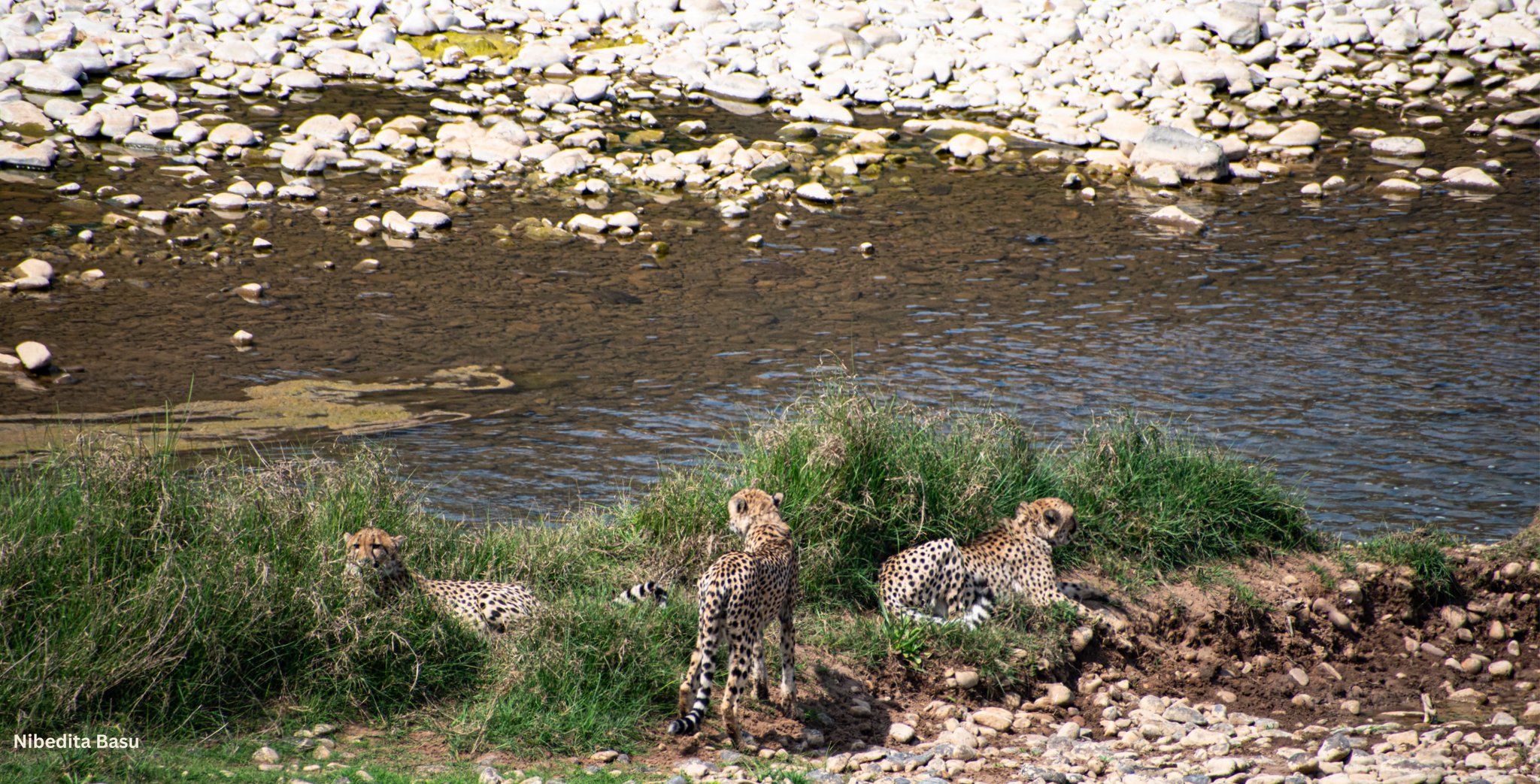
Bhopal: On a day when Madhya Pradesh was celebrating its cheetah conservation success story there came a major setback to its Project Cheetah when as many as four cubs of female cheetah (KGP-12) were found dead near a den in Sheopur’s Kuno National Park on Tuesday (May 12, 2026) morning.
The state government in its official release shared the information regarding death of the one-month-old cubs who were being monitored without interference and were seen alive till Monday evening, as per an official press release from Madhya Pradesh government.
As per the official information, a monitoring team discovered the four one-month-old cubs in a mutilated state near the den located within the Sheopur Territorial Division area.
The cubs were born in the open wilderness on April 11, 2026. Thus, they lived exactly one month.
A preliminary investigation suggests that the cubs were killed by any predatory animal.
The Forest Department has clarified that the cubs’ mother is completely safe, healthy, and in normal condition. All other cheetahs currently present in Kuno are also healthy and are under continuous monitoring.
According to the Forest Department, the cubs were last seen alive on the evening of May 11.
Prima facie, this incident appears to be a case of predation by another wild animal. However, the actual cause of death can only be confirmed following the post-mortem report and a detailed investigation, says the official release.
Earlier, on Monday, Madhya Pradesh chief minister Dr Mohan Yadav two female cheetahs into Kuno National Park. The cheetahs were brought from Southern African country Botswana.
As per a government release issued on Monday, “Project Cheetah” is growing rapidly in the state. The state has as many as 57 cheetahs out of whom 37 were born in Madhya Pradesh itself.
The state government said on Tuesday, “Kuno National Park in Sheopur has become a global symbol of wildlife conservation. Giving new momentum to ‘Project Cheetah’, launched under the guidance of Prime Minister Narendra Modi, Chief Minister Dr Mohan Yadav released female cheetahs brought from Botswana into the open forest, advancing this ambitious initiative.”
The state government’s official release states, “The successful reintroduction of cheetahs in India after nearly a century has sent a strong global message that extinct species can be revived through scientific management and strong political commitment.”
The State Government is now working towards developing Kuno as a “Global Breeding Centre.” Simultaneously, Gandhi Sagar Sanctuary is being developed as the second cheetah habitat, while Veerangana Durgavati Tiger Reserve, Nauradehi, is being developed as the third major cheetah landscape. The construction of a soft-release boma in Nauradehi marks the beginning of the next phase of the cheetah rehabilitation project, states the release.
