

Bhopal: State Cabinet in Madhya Pradesh on Sunday approved the draft Uniform Civil Code (UCC) Bill, taking a significant step towards introducing a common civil law framework in the state.
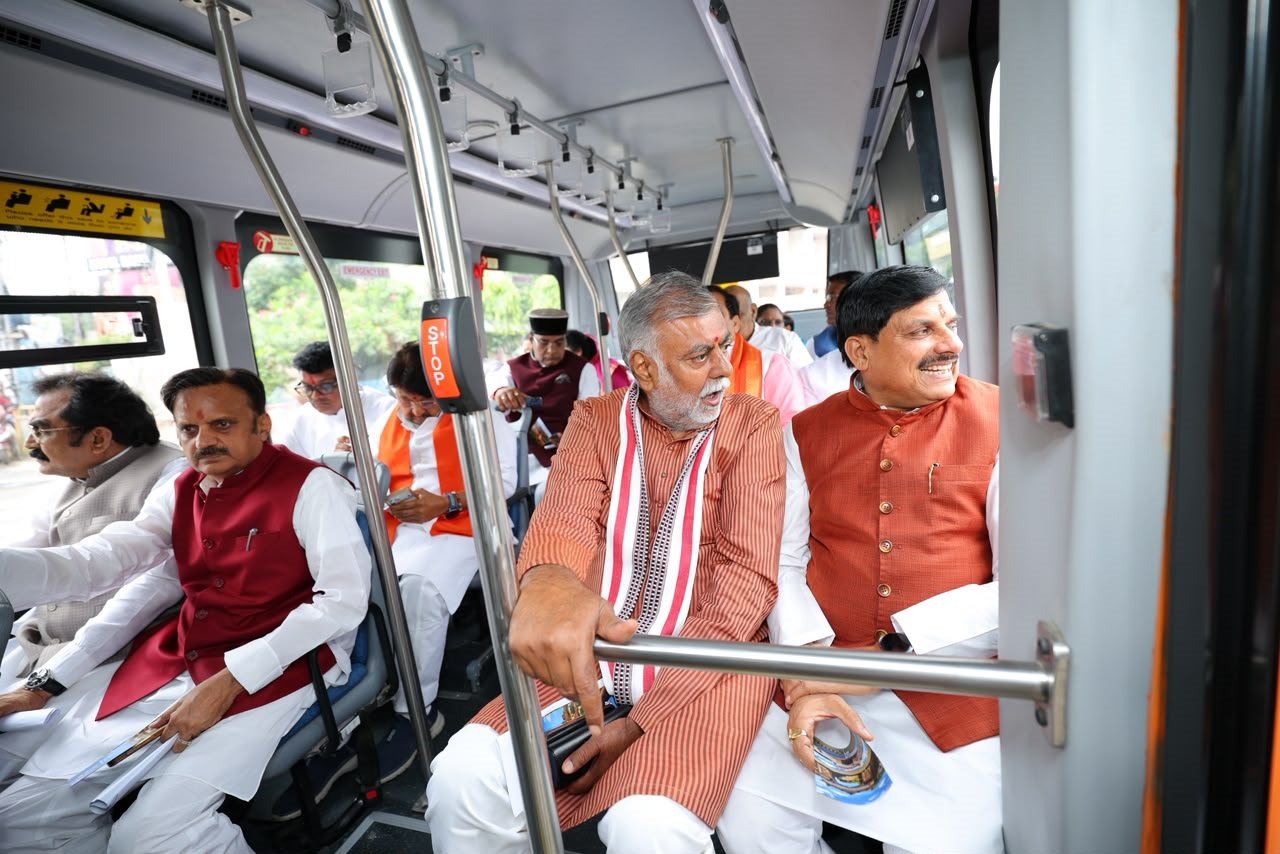
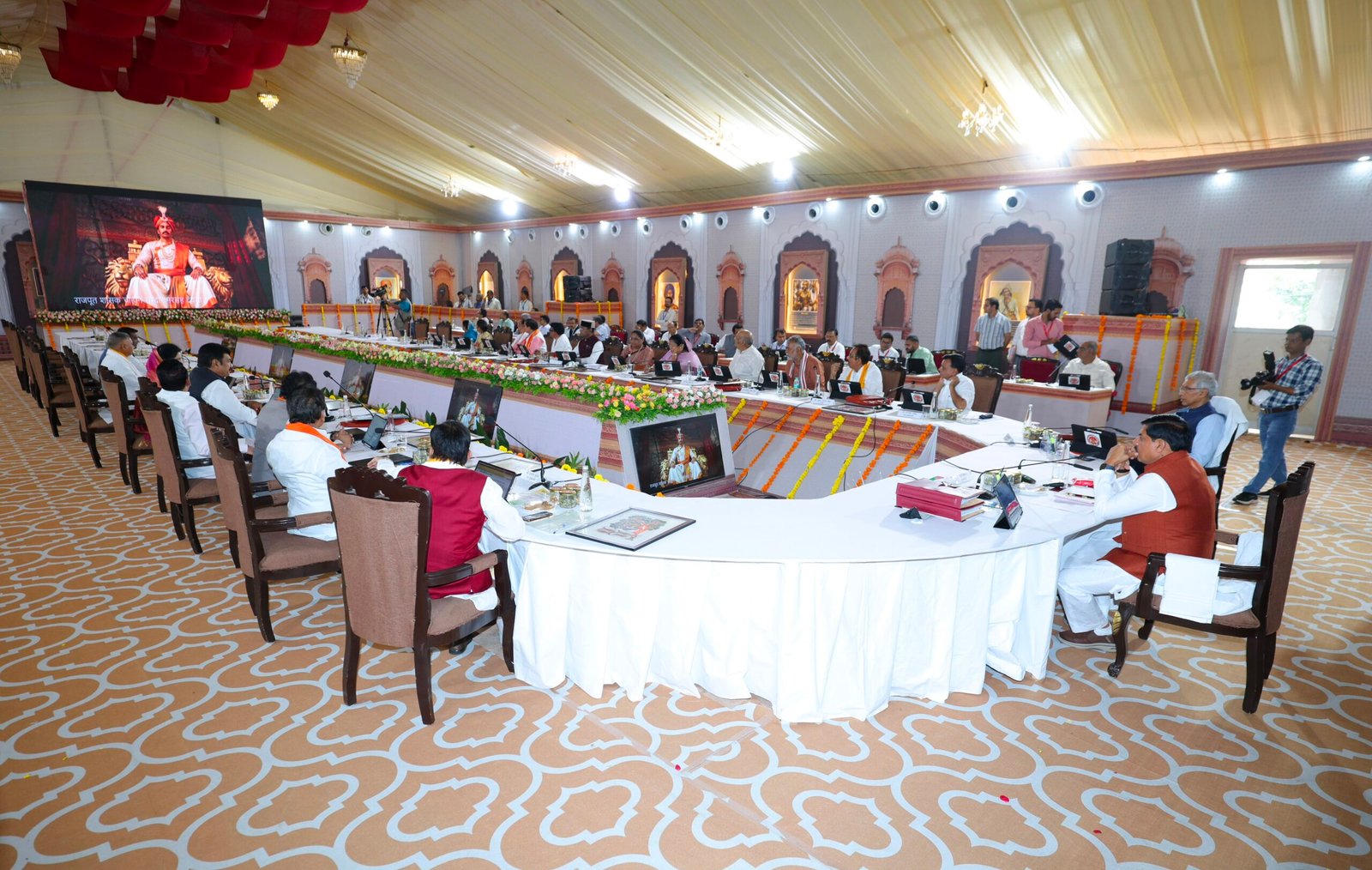
The Cabinet meeting chaired by Chief Minister Dr Mohan Yadav was held at Chaman Mahal in Jagdishpur. The entire cabinet led by the chief minister boarded an electric bus and officers another electric bus to reach the venue.
The state government is expected to introduce the bill during the Assembly’s monsoon session beginning Monday.
According to the government, the draft legislation has been prepared after an extensive study of the Uniform Civil Code frameworks implemented in Uttarakhand (2024) and the similar bill in Gujarat (2026) and Assam (2026). Uttarakhand became the first state in the country to implement a Uniform Civil Code.
If passed by the Assembly, the proposed law will prohibit polygamy and make the practice of nikah halala a punishable offence. It also provides that no person, irrespective of community, can have more than one living spouse at the same time.
Scheduled Tribes exempt
However, the proposed law will not apply to Scheduled Tribes covered under Articles 342 and 366(25) of the Constitution, including communities such as Bhil, Gond, Korku, Baiga, Sahariya and Bharia. Communities enjoying constitutional protection under Part XXI of the Constitution have also been kept outside the ambit of the proposed code.
Regulation of live-in relationships
The Bill makes it mandatory for couples in live-in relationships to submit a declaration to the registrar concerned within one month of commencing cohabitation.
Partners must be at least 18 years old, unmarried, not related within prohibited relations and must enter the relationship with free consent.
If either partner is below 21 years of age, the registrar will inform their parents or guardians and forward the information to the local police station.
Protection for women and children
Children born out of live-in relationships will be treated as legitimate and will enjoy full inheritance rights.
If a male partner abandons a woman in a live-in relationship, she will be entitled to seek maintenance through a competent court in the same manner as a legally wedded wife.
Living together for more than one month without registration may attract imprisonment of up to three months or a fine of Rs 10,000.
Providing false information may invite up to three months’ imprisonment and a fine of Rs 25,000. Failure to submit the required declaration even after receiving notice from the Registrar may attract imprisonment of up to six months and a fine of Rs 25,000.
Marriage age and conditions
The draft prescribes the minimum marriageable age at 21 years for men and 18 years for women. It also prohibits marriages between persons falling within prohibited degrees of relationship unless such unions are recognised by established customs.
Divorce only through legal process
The Bill proposes that marriages can be dissolved only on legally recognised grounds. Instant verbal divorce or dissolution through informal community bodies or panchayats will have no legal validity.
Equal rights relating to pregnancy
The draft gives women the right to seek annulment of marriage if it is discovered that the husband had impregnated another woman at the time of marriage.
Mandatory registration
Registration of both marriages and divorces will become mandatory. Registration in urban areas will be carried out through the MP e-Nagar Palika portal, while in rural areas it will be handled through SDMs, municipalities or gram panchayats.
Failure to register a marriage will not invalidate the marriage itself. However, registrars rejecting applications without valid written reasons may face penalties.
Equal status for all children
The proposed law removes the term “illegitimate” from the legal framework. Children born to married or unmarried parents, as well as those born through adoption, surrogacy or Assisted Reproductive Technology (ART), will enjoy equal legal status.
Child’s welfare to be paramount
In custody disputes, courts will give overriding importance to the child’s welfare and overall well-being rather than the competing rights of parents.
Gender-neutral inheritance
The Bill proposes equal inheritance rights for sons and daughters irrespective of their marital status. Widows and widowers will also receive equal treatment under succession laws.
Both parents will be recognised as Class-I heirs and will inherit equally alongside the deceased person’s spouse and children.
In cases where a person dies intestate, property will devolve through a graded succession system comprising Class-I heirs, Class-II heirs and other relatives. The draft also introduces a unit system and the principle of survivorship for earlier generations.
Disqualification and escheat
Any person convicted of murdering or abetting the murder of a property owner will be permanently disqualified from inheriting that property.
Where a deceased person leaves behind no legal heir, the property will vest in the State under the doctrine of escheat.
Complete testamentary freedom
The proposed code allows every adult of sound mind to dispose of 100 per cent of both self-acquired and ancestral property through a will. This departs from existing restrictions under certain personal laws, including the one-third limitation under Islamic inheritance law. Wills will be governed by the Indian Succession Act, 1925.
“At a Glance”
Key Proposals
-
Ban on polygamy.
-
Nikah halala to become a punishable offence.
-
Mandatory registration of marriages and divorces.
-
Legal recognition for children irrespective of birth status.
-
Equal inheritance rights for sons and daughters.
-
Scheduled Tribes exempted.
-
Regulation of live-in relationships.
-
Freedom to will entire property.
-
Bill likely to be introduced during the Assembly’s monsoon session.
