

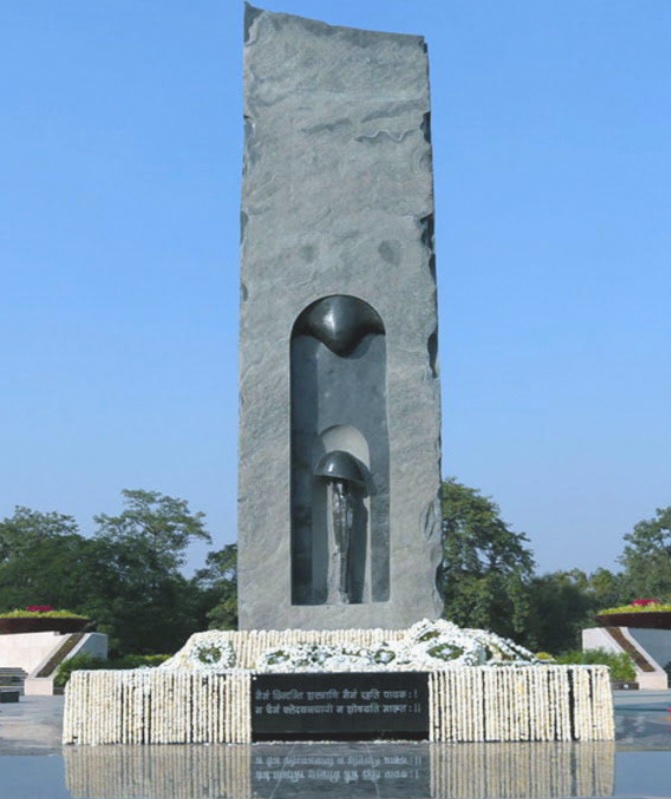
Between and beyond these two tragedies, over 35000 police personnel have lost their lives in the course of service since India gained Independence. Hot Springs to Pulwama , Bastar to Gadhchiroli, Mumbai to Hyderabad, they are pitted against an enemy who shares the land, the language, the government. There are no borders, no barbed wires, no trenches.
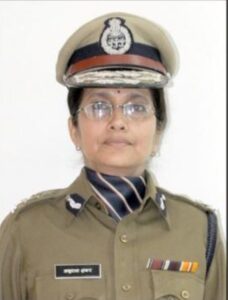
-Anuradha Shankar (IPS-1990)
(Retd at the rank of Director General of Police, Madhya Pradesh cadre)
It was an excruciating smell. When the rectangular plywood cartons posing as coffins were opened in the courtyard of Raipur Police Lines, burnt flesh, marigolds wilting in the salty melt of dirty ice and spent explosives combined into an insidious pungency. It is now an olfactory memory for me which surfaces every time any colleagues in uniform are garlanded after laying their lives in the line of duty. That harsh day witnessed senior officers scuttling to make bodies whole by gathering fragmented limbs. Who knows which family performed the last rites of whose kin? These fragmented brethren were from Bastar where police had seen the first major martyrdom at the hands of Maoists in 1992.
Head Constable Sengar from Raisen, MP, went to arrest an accused wanted in a case under SC/ST (Prevention of Atrocities) Act in 2018. He was martyred: chased and crushed by the absconder in a car. He is just one of the hundreds of unnoticed police personnel who are killed by their fellow citizens during day to day law-enforcement activities.
Between and beyond these two tragedies, over 35000 police personnel have lost their lives in the course of service since India gained Independence. Hot Springs to Pulwama , Bastar to Gadhchiroli, Mumbai to Hyderabad, they are pitted against an enemy who shares the land, the language, the government. There are no borders, no barbed wires, no trenches. Most of the time the theatre has no history either. Sudden death may claim them: in a narrow lane between St. Xavier’s College and Rang Bhavan in Bombay or on a dusty road throbbing with tractor trolleys laden with loot from illegal quarries in the Chambal Ravines. Every year on 21 October the litany of names at the Martyr’s Memorial in Police Parade Grounds all over the country gets longer.
The debate over the definition of “laying their lives for the nation” has been going on for decades. Much confusion prevails over whether the nomenclature of such deceased should be “martyr”. Some think of the term in religious context, others limit it to combat zones. Legalese apart, the fallen soldier, the felled security person is a martyr in public perception. No one begrudges the lionising of the fallen kegs of our war machine securing the sovereign borders of India. It is bewildering that those who die facing the destabilising forces within our borders go unnoticed, even reviled. The compensation paid to the dependants of policemen killed on duty is little compared to the armed forces and varies from state to state. The medals are not commensurate with their valour. The glory is fleeting and the remembrance fades before the last rites are over. How long can you go on talking of the uniformed dead when they never number less than three hundred per annum? “Muhurtam jwalitam shreyah,” it is glorious to burn for a little while, the Sanskrit aphorism goes ” na cha dhoomayitam chiram,” not to smoulder for ages.
Some don’t even get the closure of death. Their injuries put them in a permanent limbo. They are generally looked after by the department but very few states have schemes to compensate them with jobs for their next of kin or such guarantees that would accord dignity to their sacrifice.
It is nobody’s case that the police exceeds its brief more often than not. Every complainant demands satisfaction and expects procedural integrity only until it yields quick results for them. Most bleeding hearts harden with attachment and expect the police to do their bounden duty in everyone else’s matter but theirs. There is a keen sense of entitlement in most of our population whether through family clout, political muscle or community heft. Many a policeman has been martyred under the wheels of an entitled vehicle during an otherwise innocuous traffic check.
This writer has said elsewhere that corruption in the police is as prevalent as it is in the society. Stashes of cash and glittering glamour pervade the various labours of our Republic: rituals of democracy, rites of governance. Many of our venerable ‘spiritual’ guides who have denounced materialism and renounced the world live in air-conditioned quarters even on the temporary banks of holy gatherings. They need comfortable cars, latest gadgets and all the trappings of high life. The percentage of police personnel of integrity is commensurate with such numbers among the populace.
Those that wade into situations which may ask for the ultimate sacrifice are a rare breed. Martyrs who held a high legacy of police duty and incapacitated Kasab which gave us the only living lead to our enemies, died beside the indubitable Martyr Hemant Karkare whose professional rigour was long attested. The right and professedly honourable fingers which were raised at him and came down only because the accusations might ‘benefit the enemy’ forget that the ‘cursed’ man went down with many valiant colleagues of all ranks. It is stupefying that despite multi-agency enquiries and exonerations, Goebbelsian tactics abound merely to facilitate the dregs of society to climb onto public office stepping on the bullet-ridden pride of martyrs. When the chief executive of a nation-enterprise inaugurates a memorial for martyred internal security personnel as part of a well-curated patriotic performance it is expected that at least a veneer of respect would be maintained. The purport of legitimising the venom of those that have been under the cloud for tearing apart the fabric of our society would surely not be lost to a one so conscious of maintaining the good name of this ancient nation.
The unkindest cut however, comes from the cheerleaders whose clapping creates an aura of legitimacy around those who belittle martyrs. Blindsided by the structure but conscious of the risks, it is tragic that our internal security apparatus still lumbers ahead with almost no expectations. As Keats said in Hyperion, ” the laden heart/ Is persecuted more, and fever’d more,/ When it is nighing to the mournful house/ Where other hearts are sick of the same bruise.”

2 Comments
Impressive tribute and a resilient call for justice
Thank you so much for your valuable comment.
Regards