

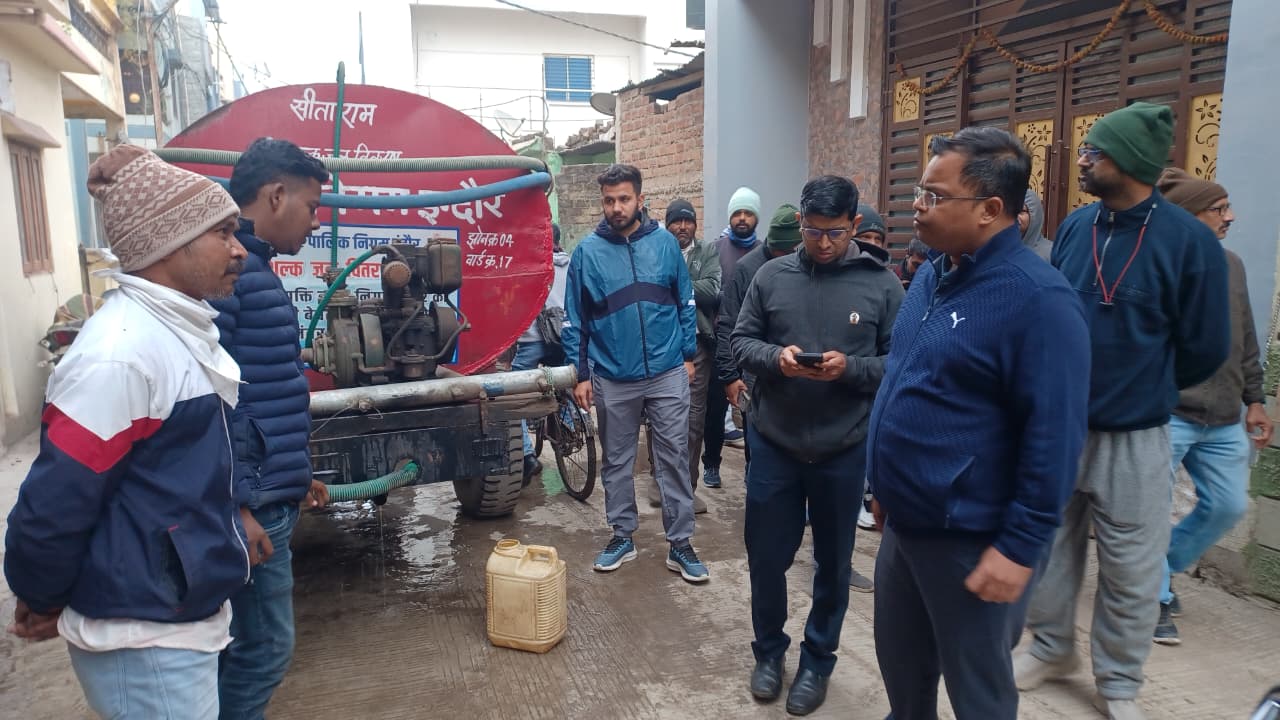
Water-borne diseases—commonly transmitted through contaminated food and drinking water—are largely preventable; yet continue to affect thousands of families due to unsafe water supply, poor sanitation, and weak monitoring mechanisms
-Jan Swasthya Abhiyan (JSA), India
Bhopal: Underlining major problems in drinking water supply system in urban areas in the state, Jan Swasthya Abhiyan (JSA), India said on Monday as many as 18.93 lakh people were affected with waterborne disease in 10 districts of the state in five years from 2016 to 2020.
JSA India has attributed this data to Madhya Pradesh state Action Plan on climate change and Human Health 2022-27.
JSA India says, “Recent data on water-borne diseases clearly indicates a serious public health concern in Madhya Pradesh, particularly in urban areas like Indore.”
Water-borne diseases—commonly transmitted through contaminated food and drinking water—are largely preventable; yet continue to affect thousands of families due to unsafe water supply, poor sanitation, and weak monitoring mechanisms, says the JSA in a communique.
Data presented in the official table clearly shows an alarming burden of preventable diseases across 10 districts of the Madhya Pradesh.
|
Sr. No. |
District |
2016 |
2017 |
2018 |
2019 |
2020 |
|
1 |
Bhopal |
82,366 |
66,218 |
75,366 |
99,866 |
57,757 |
|
2 |
Raisen |
48,886 |
54,994 |
58,123 |
61,298 |
16,662 |
|
3 |
Morena |
37,111 |
38,780 |
29,300 |
49,670 |
40,382 |
|
4 |
Bhind |
9,364 |
18,228 |
53,449 |
60,488 |
32,276 |
|
5 |
Jabalpur |
39,907 |
35,878 |
34,924 |
37,131 |
20,650 |
|
6 |
Sehore |
29,556 |
29,258 |
24,293 |
51,672 |
26,987 |
|
7 |
Gwalior |
42,051 |
33,489 |
18,578 |
28,053 |
33,146 |
|
8 |
Narmdapuram |
34,799 |
21,833 |
22,836 |
48,964 |
17,367 |
|
9 |
Khargon |
29,843 |
34,997 |
26,504 |
33,981 |
19,286 |
|
10 |
Vidisha |
21,903 |
25,164 |
23,489 |
39,898 |
16,652 |
|
Total |
3,75,786 |
3,58,839 |
3,66,862 |
5,11,021 |
2,81,165 |
|
|
Grand Total |
18,93,673 |
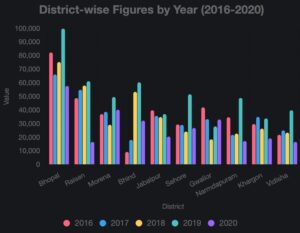
❖ Reported Cases of Water-Borne Diseases in 10 Districts (Year-wise) according to the Madhya Pradesh State Action Plan on Climate Change and Human Health, 2022-27 (https://ncdc.mohfw.gov.in/wp-content/uploads/2025/01/16_SAPCCHH_Madhya-Pradesh_21-10-24.pdf)
According to these available health data, districts such as Indore, Bhopal, Jabalpur, Ujjain, and Gwalior report a high number of cases of diarrhoea, typhoid, hepatitis, and other water-borne illnesses.
Indore district alone has witnessed alarmingly high numbers over recent years, reflecting systemic failures in water quality management and public health preparedness, states the JSA release.
As per JSA, according to report no. 3/2019 of the Comptroller and Auditor General of India (CAG), the Municipal corporations of Indore and Bhopal has supplied contaminated drinking water to 8.95 lakh families.
The Public Health Department also reported 5.45 lakh cases of waterborne diseases during the period 2013-2018. This situation still continues as a section of media has reported contaminated water in certain slums of Bhopal city.
JSA has made following demands:
1. Immediate audit in all the district of Madhya Pradesh
2. Regular water testing as suggested by CAG at 15 days intervals and reports should be made available public
3. Survey in the entire districts on the status of waterborne disease and report be made public within the 15 days.
4. Government is giving compensation is only Rs 2 lakh to kith and kin of every deceased who died due to contaminated water. The amount should be enhanced to Rs 1 crore.
5. A time-bound health adaptation and water safety plan for Indore and other affected cities.
JSA has said failure to act decisively would continue to put thousands of lives at risk and undermine public health. Clean and safe drinking water cannot remain a slogan—it must become a guaranteed reality.
Amulya Nidhi, Vivek Pawar, Raj Kumar Sinha, Sudha Tiwari, Dr GD Verma and Rahul Yadav have jointly issued the release.
