

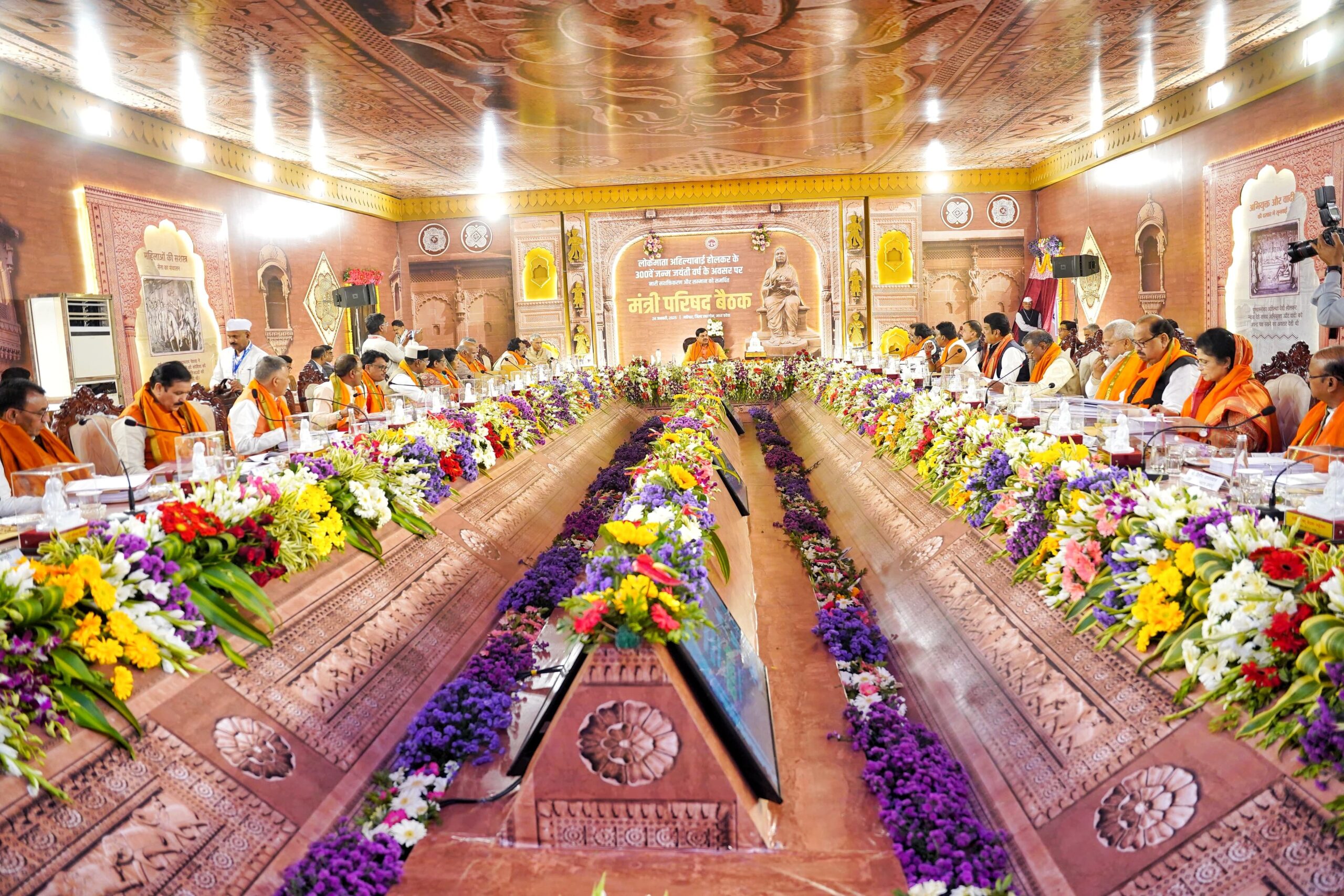
In what can be seen a marked departure from the then chief minister Shivraj Singh Chouhan’s stand on sale of liquor in Madhya Pradesh chief minister Dr Mohan Yadav dropped enough hints of total prohibition in the state in a phased manner
Bhopal: In what can be seen a marked departure from the then chief minister Shivraj Singh Chouhan’s stand on sale of liquor in Madhya Pradesh chief minister Dr Mohan Yadav dropped enough hints of total prohibition in the state in a phased manner while announcing a complete ban on sale of liquor in 17 religious cities across the state.
Dr Mohan Yadav’s announcement came after his cabinet meeting held in the religious city Maheshwar in Malwa-Nimad region on Friday.
“Our government has decided to close all the liquor shops in 17 religious cities. This is not a lip service. We have taken a principled decision on this. After April 1 next year, no such shops will be found running in these areas”, he said.
“The rural and urban areas where the liquor shops would not run include urban limits of Ujjain, Omkareshwar, Maheshwar, Mandleshwar, Orchha, Maihar, Chitrakoot, Datia, Panna, Mandla, Multai, Mandsaur, and Amarkantak. Additionally, the ban will extend to the gram panchayat limits of Salkanpur, Kundalpur, Bandakpur, Barmankalan, Barmankhurd, and Linga. The decision recognizes these 19 urban and rural areas as completely sacred, reflecting the government’s commitment to preserving their sanctity.”
Giving hint of total prohibition he said in a public meeting, “Aur dheere dheere karke, Bhagwan chahega, aur aage badhenge, baaki bhi band karenge dheere dheere (Slowly slowly, if the God is willing, we will go ahead and close the remaining (liquor shops) too).”
Justifying the ban on liquor sale in the religious cities Dr Mohan Yadav said the decision was badly required given sisters and dauthers facing the brunt of the liquor menace which ruined families. Slowly remaining shops in the state would be closed too, he announced in a categorical message that there will be a complete prohibition on liquor in the state in a phased manner in the coming days.
“Bahan beti ghar me hain. Daru peekar aa gaye bhaiya. Ab unko samhaalo ya bachchon ko samhalo. Roj jhanjhat hoti thi. Pachaas jhagde hote the. Pura ghar pareshan. Fir maine kaha ki ye dheere dheere karte hain (Sisters and daughters are at home. The brother has come home drunk. Now what to do? Take care of him or the children? There was a lot of feud and quarrels in the houses every day. That’s why I have decided to do it slowly slowly (liquor prohibition)”, said the chief minister.
“Liquor is like a curse in Home. That’s why we have decided to close all the liquor shops in the religious cities and we are making a beginning from this land of Maheshwar”, he added.
SHIVRAJ SINGH CHOUHAN’S POLICY
Shivraj Singh Chouhan who became chief minister of Madhya Pradesh in November 2005 and remained in office till December 2023 except for 15 months of Congress rule had said in 2017 that immediate total prohibition was not a solution to the drinking problem and that until there was awareness among people, the menace was difficult to be eradicated.
Chouhan had decided that there would be no liquor shops in five kilometres from the banks of river Narmada.
Sharing platform with senior BJP leader Uma Bharti on March 11, 2023 Shivraj Singh Chouhan said, “In the new excise policy, a moral ban has been imposed on consuming alcohol. Consumption of liquor in public places has been banned. This is a big step in terms of preventing accidents and social reform.”
Chouhan’s response came in response to Uma Bharti’s demand for a total prohibition in the state.
On April 8, 2023 he said the government was emphasising on moral exhortation for liquor prohibition in the state. “All liquor ahatas (compounds adjacent to liquor shops) have been closed in the state from April 1”, he added.
Talking to media persons in Bhopal on Thursday former chief minister Uma Bharti showered praises on Dr Mohan Yadav for contemplating liquor ban in religious cities and said a complete prohibition was possible in the state as the loss of revenue can be compensated with the revenue earned from transport check-posts alone as the check-posts scam unearthed had suggested.
