

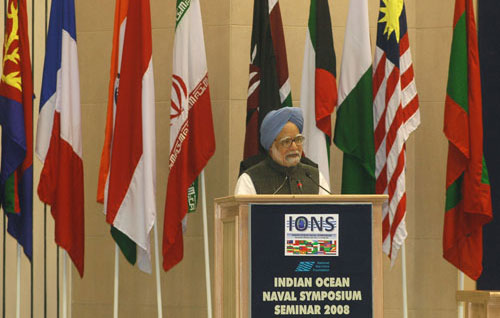
Dr Manmohan Singh ushered the country on such a path of development that changed the face of the country with massive investment in the fields of technology and industrialisation and brought to an end the much talked about “inspector raj”
Architect of the economic liberalisation the Indian government implemented in 1991, a term which was discussed only in academic discussions till then, Dr Manmohan Singh ushered the country on such a path of development that changed the face of the country with massive investment in the fields of technology and industrialisation and brought to an end the much talked about “inspector raj”.
Dr Singh who passed away at the age of 92 at All India Institute of Medical Sciences (AIIMS), New Delhi on December 26 introduced the country to such a powerful economic liberalisation policy in 1991 as the then finance minister of the country that even his opponents in coveted Prime Minister’s chair- be it the then Prime Minister Atal Bihari Vajpayee who took oath as the PM three times or his successor Narendra Modi who is currently having his third successive term as the PM- couldn’t even think of discarding the economic liberalisation policy rather they followed it religiously.
India had limited consumer items whether big or small till the economic liberalisation policy was introduced. The middle class and low-income groups had limited access to landline phone, refrigerators, cars, air-conditioning machines, computers, branded shoes and clothes etc. Even one had to struggle with ballpoint pens available in the market to enjoy a smooth writing on papers, given the poor quality of manufacturing of such pens. Smart phones and ATMs of banks were nothing but a distant dream. That every hand will have a smart phone getting rid of dependence on the landline phones largely available in public call offices (PCOs) in the market, a culture of late 90’s, and one could withdraw money from banks’ ATMs in the neighbourhood 24×7 getting rid of hassles in standing in queues in banks could not be imagined even in the wildest of dreams.
That brave decision of Dr Manmohan Singh as the finance minister in Narasimha Rao government (1991-96) set the tone of rapid changes in the market, industrialisation, manufacturing, entrepreneurship and consumer goods. Not only this, people had avenues to have better salaries, packages and wages with doors for foreign direct investment (FDI) opening and the country’s growth rate growing by the year. Thus, the middle class in particular could afford branded and luxurious items that it could only think of prior to the policy being introduced.
In his last press conference as the Prime Minister of the country in January 2014 Dr Manmohan Singh while responding to a question said, “I honestly believe history will be kinder to me than the contemporary media or for that matter, the Opposition parties in Parliament.”
How true his words were. There are often debates in the country if Dr Singh’s policy of economic liberalisation has benefitted the masses or helped only the affluent class in the country to get richer and richer but as he has departed from this world now this can be said with certainty that the history of Independent India can’t be written without Dr Manmohan Singh and his economic liberalisation and that too in a positive manner.
